Evaluating High-Temperature Grease Suppliers: Key Capabilities and Delivery Assurance Checks
A high-temperature grease supplier evaluation has to answer two questions that are often collapsed into one. The technical question is whether the supplier's thickener portfolio, model range and stated temperature data actually cover your duty. The operational question is whether the same specification can be produced, tested and repeated delivery after delivery. Suppliers that pass the first test and fail the second are the most expensive outcome in grease procurement, because the failure usually appears months later as re-lubrication downtime rather than as a rejected shipment.
Problem Definition: Why Capability and Delivery Assurance Must Be Audited Separately
Capability is measurable in three things: the number of thickener chemistries a supplier can produce, the breadth of models within each chemistry, and whether operating limits are published as testable numbers rather than marketing ranges. Delivery assurance is measurable in a different set of things: production capacity, lead time, pre-shipment acceptance criteria, payment and delivery terms, and how incoming raw-material variation is controlled.
Most specification failures in high-temperature grease sourcing trace back to one of three gaps.
- Chemistry gap. The supplier offers only one thickener family, typically lithium-based. When the application moves to sustained high temperature, heavy load or water splash, the buyer is forced to re-source mid-project and re-qualify a new grease on running equipment.
- Data gap. Temperature claims are stated without a dropping point or a load figure. A working temperature range alone does not tell a maintenance engineer how far the grease sits below its structural failure point.
- Repeatability gap. The first batch matches the datasheet and later batches drift, because raw-material quality variation is not controlled at goods-in.
One distinction prevents a large share of mis-selection: dropping point is not working temperature. The working range is the interval the supplier expects the grease to serve continuously; the dropping point is the temperature at which the grease structure collapses. Buyers should treat the gap between the two as the safety margin they are actually purchasing.
Industry Background: What Is Moving in High-Temperature Grease Supply
The global high temperature grease market was valued at approximately USD 28.04 billion in 2025 and is projected to reach USD 48.71 billion by 2035, according to market report data aggregated through Vertex AI Search. Absolute market-size figures should be treated as context rather than as a procurement input, because published estimates diverge sharply: Market Research Future places the 2024 market at USD 5.82 billion and SNS Insider at USD 26.23 billion. The divergence reflects different definitions of what counts as specialty versus commodity grease, not necessarily different demand.
The regional and chemistry signals are more directly useful to a sourcing decision.
- Asia Pacific led the high temperature grease market in 2025 with a 38% global share, driven by automotive manufacturing hubs (Market Research Future).
- Lithium and lithium complex greases remain the most widely used thickener types, accounting for 38.3% and 18.6% of global production respectively in 2024, or 56.9% combined (Society of Tribologists and Lubrication Engineers).
- Calcium sulfonate grease production grew by 7.7% globally in 2024, gaining traction in heavy-duty industrial applications because of superior water resistance (STLE).
- Lithium prices rose between 80% and 120% from 2021 to 2023, which drove manufacturers and buyers toward polyurea and calcium sulfonate alternatives for high-temperature applications (STLE).
- The automotive segment captured 42.6% of high-temperature grease market share in 2025, the largest single application category.
- Polyurea greases are increasingly specified for electric vehicle wheel bearings and turbine yaw drives, where oxidation resistance across cycles from -40°C to +180°C matters (Grease Market Size & Industry Trends 2025–2031).
- China's finished lubricant exports rose by 10% to 260,000 metric tons in 2024, reflecting a growing reliance on overseas markets (China Customs, reported via Lubes'N'Greases).
Two standards give buyers a shared vocabulary when they check supplier claims. ASTM D3336 is the test method used to evaluate the life of lubricating greases in ball bearings at elevated temperatures up to 400°F / 204°C (ASTM International). DIN 51502 classifies greases by maximum operating temperature using letter codes — K and M (+120°C), N (+140°C), P (+160°C), R (+180°C), S (+200°C), T (+220°C) and U (above +220°C) (DIN). These letters are a comparison shorthand; the assignment belongs to the classification the supplier declares, not to an assumption the buyer makes.
Capability Indicators: What to Verify Before You Shortlist

1. Thickener chemistry coverage
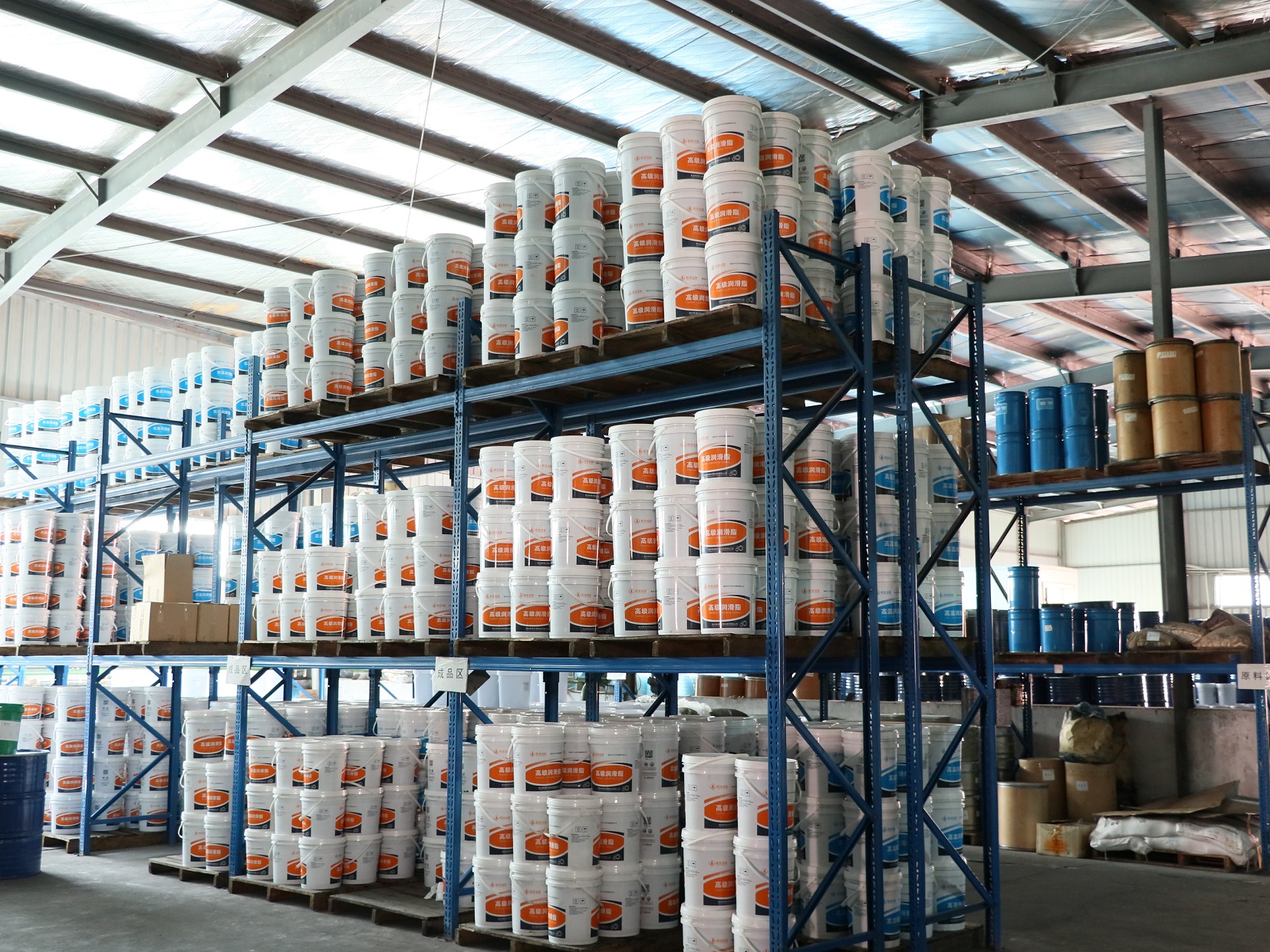
A supplier that can produce more than one thickener chemistry lets a buyer solve an application problem by changing grade rather than by changing vendor. Hangzhou Xingang Lubrication Technology Co., Ltd. (XINGANG), a grease and industrial lubricant manufacturer established in 1993 in Hangzhou, Zhejiang, China, is a useful worked example of a multi-chemistry portfolio: lithium complex, calcium sulfonate complex, polyurea, and multipurpose lithium greases, alongside industrial lubricants and OEM formulations.
Chemistry is not a preference; it is a duty decision. Lithium complex carries the bulk of general high-temperature industrial work. Calcium sulfonate complex is the family typically chosen where high temperature combines with water splash and heavy load. Polyurea is the family increasingly specified where oxidation resistance over long cycles matters, including electric vehicle wheel bearings and turbine yaw drives. Lithium greases remain the default for general-purpose, lower-temperature service.
2. Model range breadth within each chemistry
Breadth matters because a single chemistry rarely fits every lubrication point on one site. A supplier whose range stops at two or three grades forces the buyer to hold mixed-vendor stock, which multiplies the risk of mis-application at the grease gun.
XINGANG's published range illustrates what breadth looks like in practice across four families:
- Lithium complex: XG/HP, applied in metallurgy and iron/steel plant lubrication systems.
- Calcium sulfonate complex: XG/C4 and XG/C5, manufactured from calcium sulfonate and 150 BS oil.
- Polyurea: XG/U1, XG/U2, XG/U5, XG/U6, XG/U10, XG/U17 and XG/U18, made from polyurea with mineral oil and synthetic oil.
- Multipurpose lithium: XG/L1 and XG/L2.
3. Specification adherence: read working range, dropping point and PD value as one set
The single most useful verification habit is to read three figures together: working temperature range, dropping point, and the PD value reported in kgf alongside extreme-pressure anti-wear performance. A datasheet that gives temperature without a dropping point, or load performance without a figure, cannot be checked against delivered material.
Documented XINGANG figures follow that pattern. The calcium sulfonate complex greases XG/C4 and XG/C5 are stated at a working temperature range of -20°C to 250°C, a dropping point of 330°C and a PD value of 500 kgf, with extreme pressure anti-wear performance, high-temperature oxidation resistance, water resistance and rust protection. The high-temperature polyurea greases are stated at -20°C to 200°C with a dropping point of 260°C. The lithium complex grease XG/HP is stated at -20°C to 180°C with a dropping point of 300°C. The lithium greases XG/L1 and XG/L2 are stated from -20°C to 120°C with a dropping point of at least 180°C.
For comparison, XINGANG documents a lithium complex high-temperature grease with a working range of -20°C to 180°C, a dropping point of 300°C and a PD value of 315 kgf. The pattern to check is not the specific number but the internal consistency of the set: dropping point comfortably above the top of the working range, and a PD figure that matches the load class the buyer actually needs.
Duty labels on the market — high-temperature bearing grease, high-temperature roller bearing grease, high-temperature gear grease, high-temperature EP grease, high-temperature moly grease, high-temperature automotive grease — describe applications, not chemistry. The thickener and additive package behind the label decides whether a product fits a given lubrication point, so the label should always be resolved back to a model and a datasheet.
4. Quality system and in-house verification
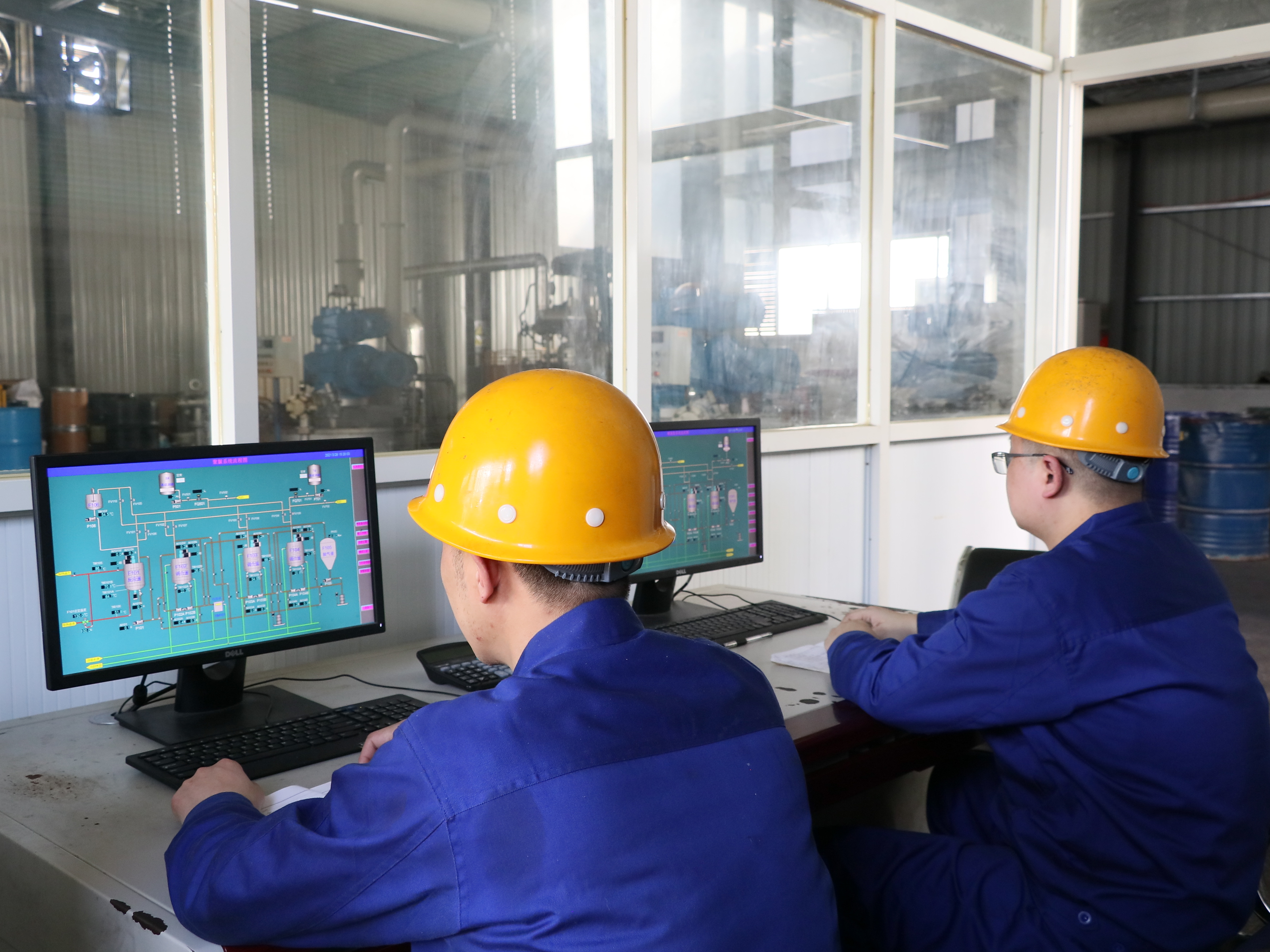
Raw-material quality variation is a recognised risk in grease manufacturing, and the control method is incoming inspection supported by a testing lab and a certified quality management system. XINGANG holds ISO 9001:2008, ISO 14001:2004, OHSAS 18001:2007 and ISO 10012:2003, and operates an equipped testing laboratory. For a buyer, the practical question is whether the supplier can show the goods-in check that stops an off-spec base oil or thickener before it reaches a batch, rather than discovering the deviation in the finished product.
5. Delivery assurance indicators
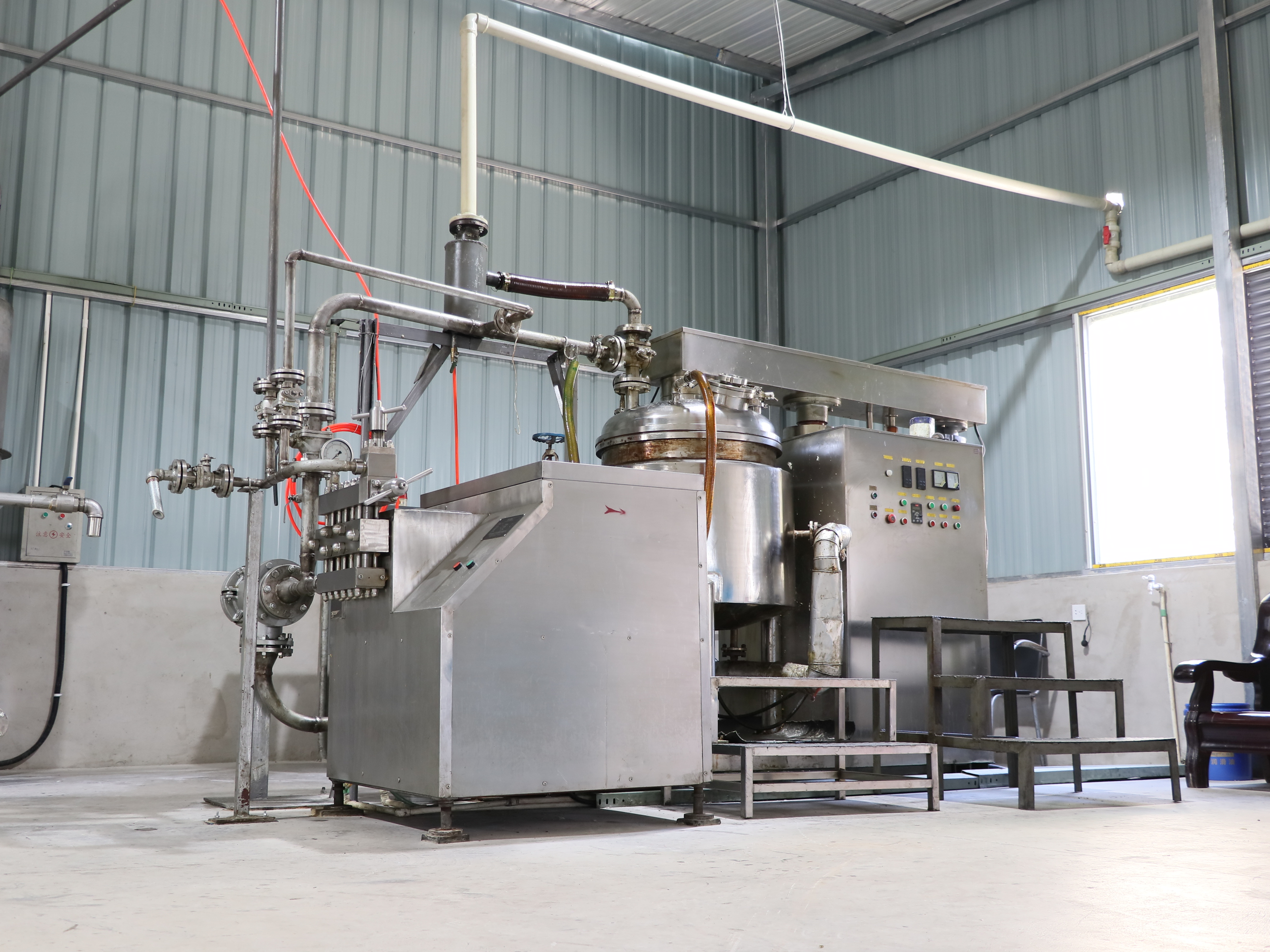
Delivery assurance is where long-term supply relationships are won or lost, and it is verifiable before the first order. XINGANG's monthly production capacity is 3,000 tons, with annual output of 45,000 tons and a typical lead time of 10 to 20 days. The purchase terms recorded for grease supply are a minimum order quantity of 200 KG, FOB/CIF delivery terms, pre-shipment test as the acceptance criterion, and T/T payment terms. The company also provides packaging specifications and transportation/storage precautions, and lists usage and storage notes on product pages — the documents that determine whether a delivered pallet still performs like the sample.
Step-by-Step: A Seven-Step Supplier Evaluation Protocol
The sequence below converts the indicators above into a repeatable evaluation procedure for buyers at the Decision and Execution stages.
- Map the duty before contacting suppliers. Record the continuous operating temperature at the lubrication point, the load type (steady, heavy or impact), water exposure, and whether the point is a bearing, roller bearing, gear or sliding contact. Duty mapping prevents suppliers from quoting their most familiar grade rather than the correct one.
- Match duty to thickener chemistry. Use the chemistry families as a filter: lithium complex for general high-temperature industrial service, calcium sulfonate complex where water splash and heavy load combine with heat, polyurea where long oxidation cycles dominate, lithium for lower-temperature multipurpose points.
- Request model-level data, not family-level data. Ask for the specific model datasheet — for example XG/HP, XG/C4, XG/C5, XG/U1 through XG/U18, or XG/L1 and XG/L2 — and require the working temperature range, dropping point and PD value on the same sheet.
- Cross-check against a standard framework. Use ASTM D3336 for bearing-life expectations at elevated temperature and DIN 51502 letter codes for temperature class shorthand. Treat any gap between the declared class and the declared dropping point as a point to question before ordering.
- Verify the quality system and incoming-material control. Confirm the certifications held, whether the supplier operates its own testing laboratory, and how incoming inspection handles raw-material quality variation.
- Confirm commercial and acceptance terms in writing. Minimum order quantity, delivery terms, payment terms, and the pre-shipment test that defines acceptance should all be fixed before the purchase order, not negotiated after a dispute.
- Lock the repeatability terms. Confirm capacity, the typical lead time, and the packaging, transportation and storage instructions that accompany each shipment. These are the terms that carry a supplier relationship past the first order.
Use Cases: Where These Checks Change the Outcome
Steel mills, metallurgy and heavy machinery
Metallurgy and iron/steel plant lubrication systems are the documented application environment for the lithium complex grease XG/HP, and the calcium sulfonate complex grades XG/C4 and XG/C5 are designed for operation under high-temperature, heavy load and water-splash conditions. These grades are documented as more suitable for high-temperature, heavy-load and impact-load applications in iron & steel, metallurgy and mining equipment. For this duty, the chemistry decision and the dropping-point margin usually settle the shortlist before price is discussed.
Automotive and component manufacturing
Automotive is the largest single application category in the high-temperature grease market. The applicability of polyurea to electric vehicle wheel bearings and turbine yaw drives has already been noted, and the calcium sulfonate complex grades are documented as designed for use in mining, machinery and automotive industries. Buyers in this segment should also verify the model range, because a supplier with only one high-temperature grade cannot cover both a wheel bearing and a chassis point at a single site.
Mining, ports and wet industrial environments
Water splash is the variable that most often disqualifies an otherwise acceptable high-temperature grease. Calcium sulfonate complex greases, with documented water resistance and rust protection alongside a 500 kgf PD value, are the family normally evaluated for this duty, and their global production growth of 7.7% in 2024 reflects that shift.
Distributors and long-term supply programs
For distributors and buyers building a long-term supply program, delivery assurance becomes the primary evaluation criterion and technical capability becomes the qualifying criterion. Capacity, lead time, minimum order quantity, acceptance testing and payment terms determine whether a supply relationship can be scaled; a documented model range determines whether it can be sold into more than one application. XINGANG's export activity extends to Türkiye, South Africa, Russia, Southeast Asia and Peru, against an export ratio of 10% of total output.
Comparison Tables: Product Families and Order Assurance
The first table consolidates the documented product-family specifications discussed above; the second consolidates the documented delivery and purchase terms. Both are drawn from the supplier's own product and purchase documentation and are reproduced here as a checking template.
Table 1 — Documented high-temperature grease families
| Thickener family | Models | Working temperature range | Dropping point | PD value | Documented application focus |
|---|---|---|---|---|---|
| Calcium sulfonate complex | XG/C4, XG/C5 | -20°C to 250°C | 330°C | 500 kgf | High temperature, heavy load and water-splash conditions; mining, machinery, automotive |
| Polyurea | XG/U1, XG/U2, XG/U5, XG/U6, XG/U10, XG/U17, XG/U18 | -20°C to 200°C | 260°C | Not stated in source | Metallurgy, chemical, textile, printing and dyeing, automobile, mine, oil field, coast defence, sugaring, paper making, plastic |
| Lithium complex | XG/HP | -20°C to 180°C | 300°C | Not stated in source | Metallurgy and iron/steel plant lubrication systems |
| Lithium complex high-temperature grease (documented set) | Family grade | -20°C to 180°C | 300°C | 315 kgf | High-temperature, heavy-load and impact-load applications in iron & steel, metallurgy and mining equipment |
| Multipurpose lithium | XG/L1, XG/L2 | -20°C to 120°C | At least 180°C | Not stated in source | Automotive, metallurgy, power tools, multipurpose |
Source: supplier product documentation. Entries marked “not stated in source” are left blank rather than estimated.
Table 2 — Delivery and order assurance checks
| Evaluation item | Documented figure | Why it matters at the Decision stage |
|---|---|---|
| Monthly production capacity | 3,000 tons | Determines whether volume can be maintained during peak demand |
| Annual output | 45,000 tons | Confirms sustained production rather than campaign-based supply |
| Typical lead time | 10 to 20 days | Sets the reorder point for maintenance and distribution planning |
| Minimum order quantity | 200 KG | Affects trial-order feasibility and warehouse rotation |
| Delivery terms | FOB / CIF | Fixes the point at which risk and cost transfer |
| Acceptance criteria | Pre-shipment test | Provides a documented rejection basis before dispatch |
| Payment terms | T/T | Defines cash-flow exposure for repeat orders |
| Raw-material control | Incoming inspection, equipped testing lab, QMS certifications | Addresses raw-material quality variation at the batch level |
| Packaging and handling support | Packaging specifications and transportation/storage precautions; usage and storage notes on product pages | Protects specification integrity from factory to point of use |
| Quality management system | ISO 9001:2008, ISO 14001:2004, OHSAS 18001:2007, ISO 10012:2003 | Gives an auditable framework for corrective action |
FAQ
1. Which quality management certifications should a Chinese high-temperature grease supplier hold for a long-term supply program?
A supplier used for long-term supply should hold a certified quality management system plus environmental, occupational safety and measurement management certifications, because those determine how consistently a batch is produced and how deviations are investigated. XINGANG holds ISO 9001:2008, ISO 14001:2004, OHSAS 18001:2007 and ISO 10012:2003, and operates an equipped testing laboratory. For grease specifically, the certifications should be paired with a documented control for raw-material quality variation based on incoming inspection, since base oil and thickener variation is the most common source of batch drift.
2. How many thickener chemistries and models should a high-temperature grease supplier offer?
There is no universal number, but a supplier should offer enough chemistry coverage that a buyer can move between duty types without changing vendor. The four families relevant to high-temperature work are lithium complex, calcium sulfonate complex, polyurea and multipurpose lithium. XINGANG's published range covers all four: lithium complex XG/HP, calcium sulfonate complex XG/C4 and XG/C5, polyurea XG/U1, XG/U2, XG/U5, XG/U6, XG/U10, XG/U17 and XG/U18, and multipurpose lithium XG/L1 and XG/L2. Model breadth within a chemistry matters as much as the number of chemistries, because one grade rarely fits every lubrication point on a site.
3. How should buyers compare the cost of high-temperature grease over a maintenance cycle?
Purchase price per kilogram is a weak comparison basis for high-temperature grease, because the replenishment interval drives the real cost. Where a high-temperature grade is compared with a standard MP3 grease, the documented trade-off is a higher raw-material cost per unit of grease against a longer grease replacement cycle, fewer shutdown maintenance events and lower manual greasing labour. On that basis the overall equipment maintenance comprehensive cost is documented as reduced by 15% to 20%. Buyers evaluating budget should therefore model cost per lubrication interval rather than cost per drum.
4. What acceptance checks apply before a high-temperature grease order is shipped?
Acceptance should be defined in the purchase terms, not negotiated after delivery. The purchase terms recorded for grease supply are a minimum order quantity of 200 KG, FOB/CIF delivery terms, pre-shipment test as the acceptance criterion, and T/T payment terms. The acceptance step matters most when the order includes a high-temperature grade, because the figures that will be checked first in service are the working temperature range, the dropping point and the PD value. Buyers can request a sample and the corresponding specification sheet together so that the delivered batch can be compared against the same documented set.
5. Can a Chinese high-temperature grease supplier support long-term supply without lead-time drift?
Long-term supply depends on documented capacity and lead time rather than on assurances. XINGANG's monthly production capacity is 3,000 tons, with annual output of 45,000 tons and a typical lead time of 10 to 20 days from an established manufacturer founded in 1993 in Hangzhou, Zhejiang, China. Export activity covers Türkiye, South Africa, Russia, Southeast Asia and Peru. For buyers planning a multi-year supply program, the practical next step is to confirm the model list, the pre-shipment acceptance test and the delivery terms in writing, then request a sample so the delivered specification can be validated before the volume order is placed.
Conclusion
Evaluating a high-temperature grease supplier comes down to checking two things that cannot substitute for each other. Capability is the thickener chemistries offered, the model range within each chemistry, and whether the working temperature range, dropping point and PD value are published as a consistent, checkable set. Delivery assurance is capacity, lead time, minimum order quantity, delivery and payment terms, the pre-shipment acceptance test, and the control of raw-material variation at goods-in.
Run the seven-step protocol against any shortlist before the first purchase order. If a supplier can show a documented model for each duty on your site, numbers that hold together across the datasheet, and commercial terms that survive a repeat order, the technical and operational questions are both answered.
Next Step: Sample, Specification Sheet and Quotation
XINGANG supplies lithium complex, calcium sulfonate complex, polyurea and lithium greases from a 16,000 m² facility in Hangzhou, Zhejiang, China, with 3,000 tons of monthly capacity and a typical lead time of 10 to 20 days.
Request a sample and the matching specification sheet, or ask for a quotation on a specific model: www.china-lubes.com · Email: admin@hzxg.com · Tel / WhatsApp: +86 135-8871-1880 · Contact: Vera Wang.
Full company and product documentation: Xingang Company Profile (PDF)
Have Questions or Need More Details?
Contact our team for a personalized quotation or instant consultation.
Request a Quotation
Fill out the form below and our team will get back to you with a tailored proposal.
WhatsApp Direct Chat
Prefer to chat in real-time? Message us on WhatsApp for instant assistance & quick answers.
- Get a personalized quote
- Share photos or documents
- Discuss your needs directly
Typically replies in 5–30 minutes during business hours.