High-Temperature Grease Selection: Matching Four Grease Families to Worksite Demand
Two greases can carry the same product label and still be wrong for the same bearing. What actually decides performance is the thermal ceiling of the thickener system, the base oil behind it, the load-carrying capacity and the water exposure at the point of application. Hangzhou Xingang Lubrication Technology Co., Ltd. — the manufacturer behind the XINGANG brand, established in 1993 and based in Jiande, Hangzhou, Zhejiang — builds four high-temperature grease families that answer those conditions differently. The correct choice is the one that matches the worksite, not the one with the lowest price per kilogram.
Stated plainly, before any of the detail below: the lithium complex grease XG/HP runs from -20 to 180 °C with a 300 °C dropping point and a 315 kgf PD value, and is applied in metallurgy and iron/steel plant lubrication systems. The calcium sulfonate complex greases XG/C4 and XG/C5 reach up to 250 °C with a 330 °C dropping point and a 500 kgf PD value, and add water resistance and rust protection. The polyurea series XG/U1, XG/U2, XG/U5, XG/U6, XG/U10, XG/U17 and XG/U18 covers -20 to 200 °C with a 260 °C dropping point. The multipurpose lithium greases XG/L1 and XG/L2 cover -20 to 120 °C. Everything that follows explains how a buyer should choose between them and what to verify before committing to a repeat order.
What Buyers Actually Get Wrong About High-Temperature Grease
The first mistake is treating the phrase “high temperature” as a specification. SKF states that, as a rule, standard greases have a practical upper temperature limit of 100 °C on the ring with the highest temperature, and that above this threshold special greases or automatic greasing systems should be considered. In practice, that is the line where an ordinary bearing grease stops and a high-temperature bearing grease selection begins. It also means that everything above 100 °C is a zone of competing technical claims, where three thickener families all market themselves as suitable and none of them is interchangeable with the others.
The second mistake is reading the dropping point as a working temperature. The dropping point is a laboratory transition point, determined under a defined method — SKF references ISO 2176 for dropping point determination — and it describes the temperature at which the grease passes out of a semi-solid state under test conditions. It is a useful headroom indicator and a useful way to rank families, but it is not a service ceiling. A grease with a 330 °C dropping point is not automatically approved for continuous operation at 300 °C; the sustainable limit is set by oxidation life, oil bleed, thickener structure and relubrication interval at the hottest ring.
The third mistake is confusing load data with thermal data. The PD value describes load-carrying behaviour under extreme pressure conditions. A 315 kgf grade and a 500 kgf grade differ in load capacity, not in heat resistance. Buying the higher PD figure because a bearing runs hot solves a problem that was never diagnosed.
The fourth mistake is comparing unit price per kilogram in isolation. XINGANG's own comparison material notes that its higher-temperature grades carry a higher raw material cost per unit than standard MP3 grease, but that the overall equipment maintenance comprehensive cost is reduced by 15%–20% because the grease replenishment cycle is longer. Fewer shutdowns, fewer manual greasing rounds and less labour consumption usually outweigh the difference in the price of the drum — provided the grade is actually matched to the duty.
Industry Background: Where the Market and the Standards Point
High-temperature grease is a defined and growing category rather than a marketing phrase. Fact.MR's high-temperature grease market report projects the global market to reach US$3.2 billion by 2026, and reports that soap-based thickener greases — lithium complex and calcium sulfonate — hold a 57.4% market share by 2026. The remaining volume is spread across polyurea and other non-soap systems, which matters to buyers because thickener chemistry, not brand, determines compatibility, pumpability and shear behaviour.
Manufacturer technical literature is consistent on the qualitative differences. Chevron Lubricants describes lithium complex greases as providing high-temperature oxidation and thermal stability together with water resistance and load-carrying properties, but as less effective with cold temperature pumpability. Calcium sulfonate complex greases are described as offering outstanding oxidation and thermal stability at higher operating temperatures, plus water resistance and load carrying. Polyurea greases are described as non-metallic with antioxidant capability, good thermal stability and high-temperature performance, with weaker shear-stability characteristics than some alternatives. FUCHS summarises the same three families along similar lines: lithium complex for higher load and temperature resistance, calcium sulfonate for water resistance and EP properties, polyurea for high-temperature stability and long life. These are qualitative descriptions, not matched-condition test results, and they should be used to screen families rather than to rank products.
Test methods define what a supplier can actually prove. ASTM D3336-20b evaluates the ability of a grease to lubricate ball bearings under light loads at high speeds and elevated temperatures, with the method covering speeds up to 10,000 rpm and temperatures up to 371 °C. ASTM D3527-21 provides a laboratory procedure for the high-temperature life performance of automotive wheel-bearing grease under prescribed conditions. The two scopes are distinct and must not be treated as interchangeable: a D3336 result belongs to industrial ball-bearing duty, a D3527 result belongs to automotive wheel-bearing duty, and neither answers a question about roller bearing service on its own.
Compatibility is the fourth industry-level factor. SKF publishes a grease compatibility matrix covering lithium, calcium, sodium, lithium complex, calcium complex, polyurea and calcium sulphonate complex greases. The existence of such a matrix is the point: changeover between two greases that are both described as high-temperature still carries compatibility and temperature-service risk, and critical applications should be confirmed by testing rather than by datasheet comparison alone.
The Four XINGANG Families, Sized to Different Duty
XINGANG's product range spans industrial lubricants, industrial grease, high-temperature grease, lithium grease, polyurea grease and calcium sulfonate complex grease, with specialty performance greases and OEM formulations. Within the high-temperature segment, four families cover the practical range from 120 °C to 250 °C working temperature.
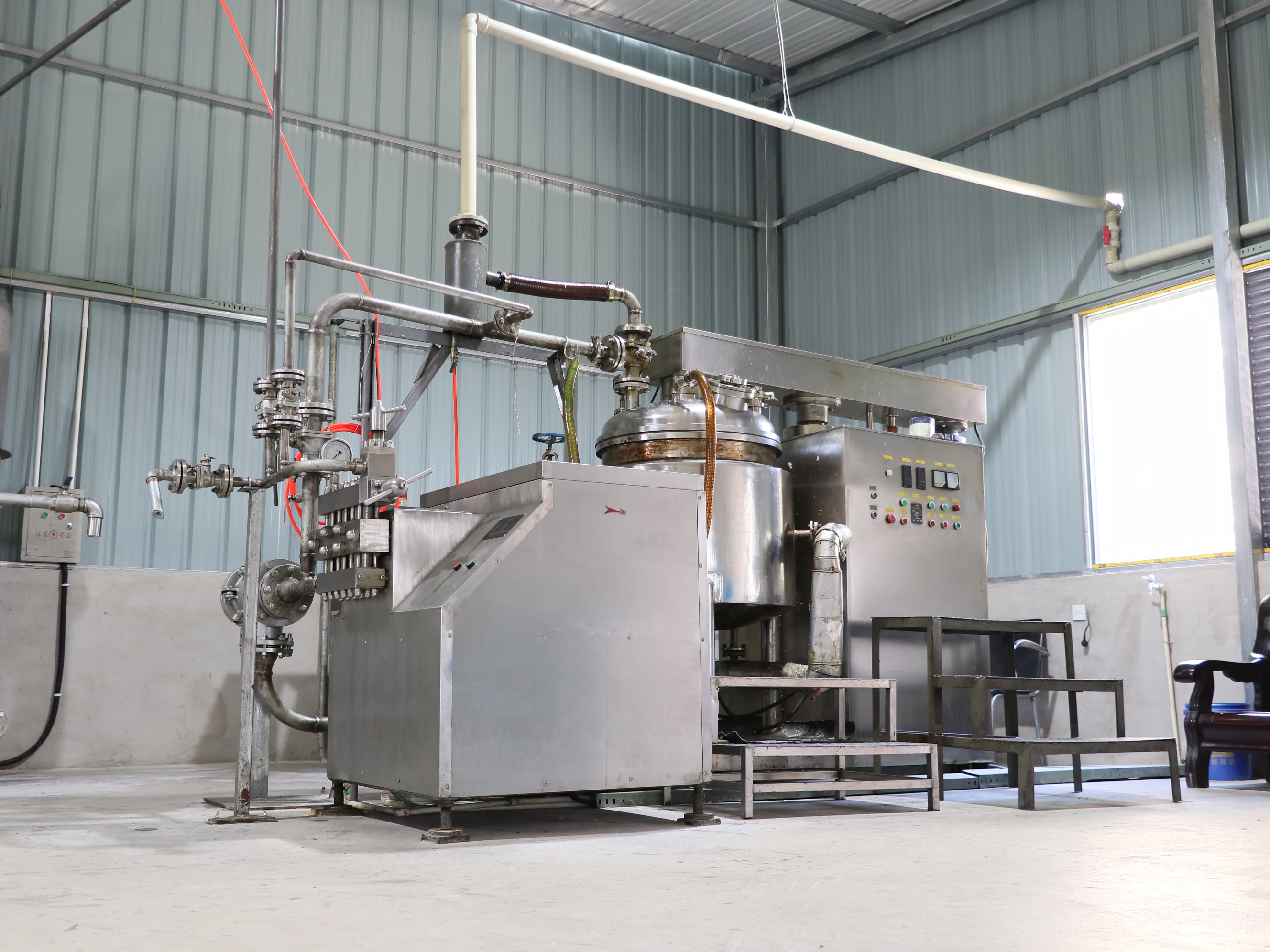
Grease production line at the XINGANG plant in Jiande, Hangzhou, Zhejiang — where lithium complex, calcium sulfonate complex and polyurea high-temperature greases are manufactured.
XG/HP Lithium Complex: the Metallurgy Workhorse
XG/HP is a high-temperature lithium complex grease applied in metallurgy and iron/steel plant lubrication systems. It operates within a working temperature range of -20 to 180 °C and has a dropping point of 300 °C, with a PD value of 315 kgf. For a buyer, the profile is straightforward: a wide sub-zero start-up capability, a working ceiling that clears most continuous casting, rolling and furnace-area lubrication points, and a moderate extreme pressure rating suited to steady rather than shock loading. XINGANG positions this family as more suitable than alternatives for high-temperature, heavy-load and impact-load applications in iron and steel, metallurgy and mining equipment. Where the specification calls for a high-temperature lithium complex grease and the site temperature stays inside 180 °C, XG/HP is the first candidate.
XG/C4 and XG/C5: Calcium Sulfonate Complex for Heat, Load and Water Together
The XG/C4 and XG/C5 grades are high-temperature calcium sulfonate complex greases manufactured from calcium sulfonate and 150 BS oil. They offer a working temperature range of -20 to 250 °C, a dropping point of 330 °C and a PD value of 500 kgf, and they provide extreme pressure anti-wear performance, high-temperature oxidation resistance, water resistance and rust protection. XINGANG specifies XG/C4 for operation under high-temperature, heavy load and water-splash conditions, and lists both grades for mining, machinery and automotive applications.
This is the family to examine when a worksite combines two or three stressors at once: a hot bearing that also sees washdown or splash, or a heavily loaded pin that cannot be relubricated often. The combination of a 250 °C working range, a 500 kgf PD value and explicit water and rust protection is the differentiator in the XINGANG range, and it is why this family is frequently requested as a high-temperature calcium sulphonate complex grease for wet, heavy-duty environments.
XG/U1 to XG/U18: Polyurea for Broad High-Temperature Coverage
The high-temperature polyurea grease is available in models XG/U1, XG/U2, XG/U5, XG/U6, XG/U10, XG/U17 and XG/U18, made from polyurea, mineral oil and synthetic oil. The product has a working temperature range of -20 to 200 °C and a dropping point of 260 °C. XINGANG lists intended use across metallurgy, chemical, textile, printing and dyeing, automobile, mine, oil field, coast defence, sugar refining, paper making and plastics industries.
Because the series runs from U1 to U18, the base-oil and consistency choice is where the real specification work happens: a single thickener chemistry is offered in multiple grades so that a plant can hold one family across several lubrication points. Polyurea is described in manufacturer literature as non-metallic with good thermal stability and high-temperature performance but weaker shear stability than some alternatives, so high-shear, high-speed points should be reviewed against the specific grade rather than the family as a whole.
XG/L1 and XG/L2: Multipurpose Lithium at the 120 °C Baseline
XG/L1 and XG/L2 are multipurpose lithium greases with a working temperature range from -20 °C to 120 °C and a dropping point of at least 180 °C. They are designed for automotive, metallurgy, power tools and multi-purpose applications. This is the grade to standardise where a site runs dozens of low-to-medium temperature points and wants one drum on the shelf for general assembly, linkage and electric tool lubrication. It is not a substitute for the three higher families on hot or heavily loaded points, and keeping it in that role is what protects the economics of the higher grades.
A Six-Step Method for Matching Grease to Worksite Demand
The selection logic can be reduced to a repeatable sequence. Each step narrows the family before price is ever discussed.
- Measure the hottest ring, not the ambient. SKF's 100 °C practical limit for standard greases applies to the ring with the highest temperature. Record that value for each lubrication point and add the margin your maintenance policy requires. Points above roughly 120 °C move out of XG/L1 and XG/L2 territory; points above 180 °C move out of XG/HP; the calcium sulfonate complex family is the one that extends to 250 °C.
- Classify the load. Steady load, shock load and impact load demand different extreme pressure behaviour. The PD value is the comparable number here: 315 kgf for XG/HP and 500 kgf for XG/C4 and XG/C5. Where a specification asks for a high-temperature EP grease, quote the PD value and the test basis, not the word EP.
- Score water exposure. Washdown, splash, steam and humid enclosure all change the requirement. XG/C4 is specified for water-splash conditions and both XG/C4 and XG/C5 provide water resistance and rust protection. On a dry point this capability is simply insurance; on a wet point it is the deciding criterion.
- Check speed and shear. ASTM D3336 covers ball bearings under light load at high speed and elevated temperature; its scope does not transfer automatically to roller bearing duty. Where a high-temperature roller bearing grease is required, ask the bearing supplier which method and which load conditions apply, and match the grease data to that basis.
- Review compatibility before changeover. Moving a lubrication point from one thickener family to another is a project, not a substitution. Use the SKF compatibility matrix as the starting reference, confirm with the bearing or equipment maker, and plan a purge procedure. This applies even when both products are sold as high-temperature grease.
- Confirm documentation and repeatability. Before the second order, verify that the grade, the certificate package and the acceptance test are stable. A supplier that can reproduce the same batch specification across shipments is worth more than a lower quotation from one that cannot.
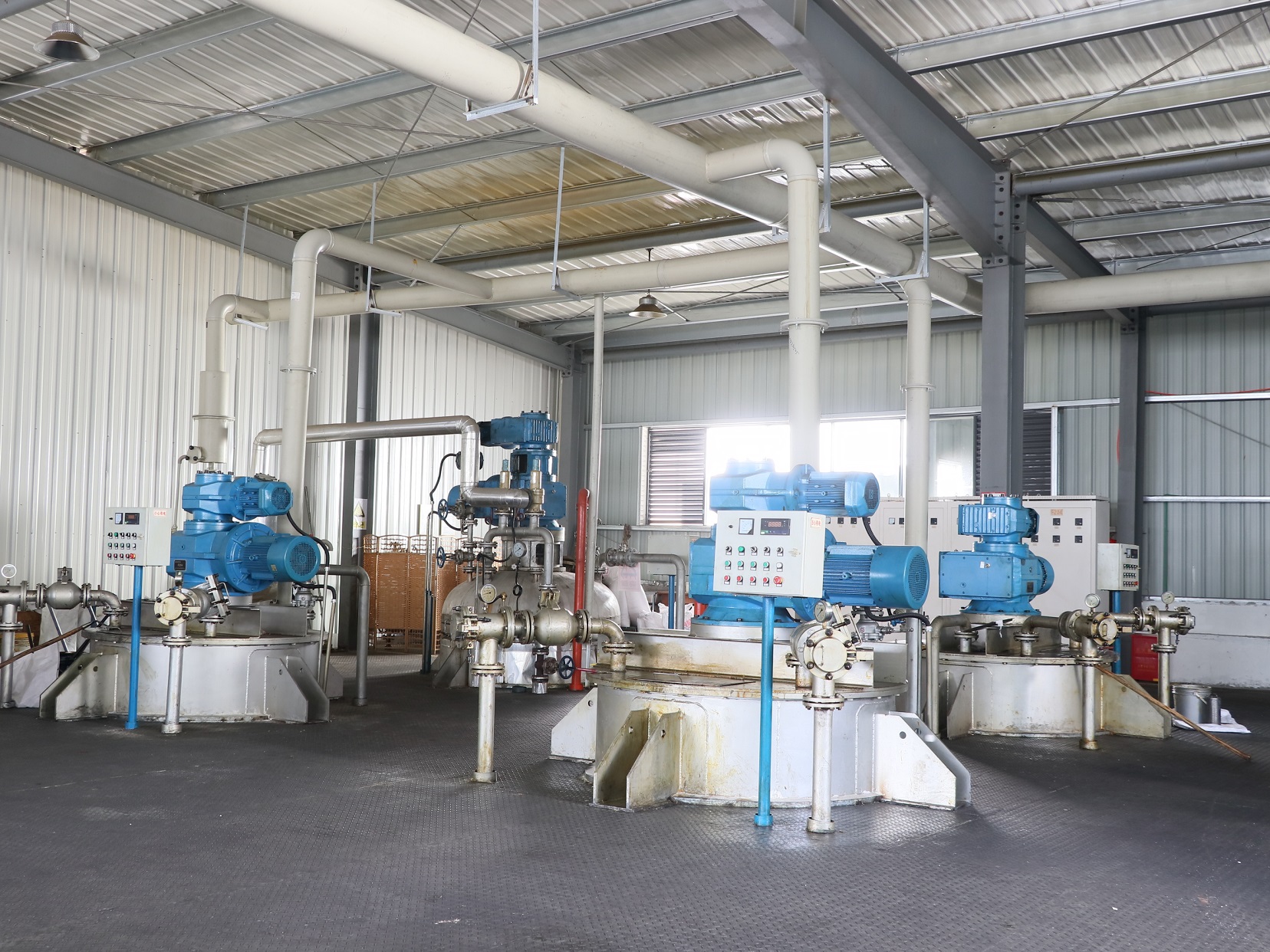
Batch production of high-temperature grease grades — the stage where thickener system, base oil and additive package are fixed for a given model designation.
Two practical notes sit outside the six steps but decide many specifications. First, where a drawing calls for a high-temperature moly grease, confirm with the supplier whether the additive package actually contains molybdenum disulphide; the thickener family does not tell you that. Second, where an open gear or coupling needs a high-temperature gear grease, the useful questions are base-oil viscosity and adhesion behaviour under heat — both of which fall under XINGANG's specialty performance greases and OEM formulations rather than under a standard catalogue grade.
Use Cases: Where Each Family Earns Its Place
Iron and steel plants. XG/HP is applied in metallurgy and iron/steel plant lubrication systems within -20 to 180 °C. XINGANG's products are used by major steel enterprises including BAOWU Group, Hebei Steel Group, Shandong Steel Group, Ma Steel, Taigang Steel, Liugang Steel, Shaogang Steel, Shagang Steel and Kungang Steel, which makes this the most heavily referenced duty in the company's own experience.
Mining and wet heavy machinery. XG/C4 operates under high-temperature, heavy load and water-splash conditions at up to 250 °C with a 500 kgf PD value. Equipment that alternates between heat and washdown belongs in this family rather than in a general high-temperature grade.
Automotive and general machinery. XG/C4 and XG/C5 are listed for automotive applications, and XG/L1 and XG/L2 are designed for automotive, metallurgy, power tools and multi-purpose use. For wheel-bearing work, ASTM D3527-21 is the relevant laboratory procedure for high-temperature life performance of automotive wheel-bearing grease, and it should be requested explicitly when a high-temperature automotive grease is being qualified.
Multi-industry process plants. The polyurea series is listed for metallurgy, chemical, textile, printing and dyeing, automobile, mine, oil field, coast defence, sugar refining, paper making and plastics applications, at -20 to 200 °C. Where a plant needs one thickener family across many process areas, the U-series model spread (U1 through U18) is where the standardisation decision is made.
General assembly and low-temperature points. XG/L1 and XG/L2 at -20 to 120 °C cover the large tail of points that never see high heat. Keeping them in that role avoids paying a high-temperature premium where it buys nothing.
Comparison Table: Four Families on the Same Criteria
The table below uses only the specification values and application statements published for these XINGANG grades. Cells marked as not stated are genuinely absent from the current data set and should be resolved by requesting the grade-specific technical data sheet.
| Family and model designations | Thickener | Base oil (as stated) | Working temperature range | Dropping point | PD value | Stated application fit |
|---|---|---|---|---|---|---|
| Lithium complex — XG/HP | Lithium complex | Not stated in the supplied data | -20 to 180 °C | 300 °C | 315 kgf | Metallurgy and iron/steel plant lubrication systems; high-temperature, heavy-load and impact-load applications in iron and steel, metallurgy and mining equipment |
| Calcium sulfonate complex — XG/C4, XG/C5 | Calcium sulfonate complex | Calcium sulfonate with 150 BS oil | -20 to 250 °C | 330 °C | 500 kgf | High-temperature, heavy load and water-splash conditions; mining, machinery and automotive; extreme pressure anti-wear, high-temperature oxidation resistance, water resistance and rust protection |
| Polyurea — XG/U1, XG/U2, XG/U5, XG/U6, XG/U10, XG/U17, XG/U18 | Polyurea | Polyurea with mineral oil and synthetic oil | -20 to 200 °C | 260 °C | Not stated in the supplied data | Metallurgy, chemical, textile, printing and dyeing, automobile, mine, oil field, coast defence, sugar refining, paper making and plastics industries |
| Multipurpose lithium — XG/L1, XG/L2 | Multipurpose lithium | Not stated in the supplied data | -20 to 120 °C | At least 180 °C | Not stated in the supplied data | Automotive, metallurgy, power tools and multi-purpose applications |
Read across the temperature column and the pattern is immediate: 120 °C, 180 °C, 200 °C, 250 °C. Read across the PD column and the load pattern is equally clear where data exists: 315 kgf for the lithium complex grade, 500 kgf for the calcium sulfonate complex grades. These two columns, plus water exposure, answer most selection questions before price is considered.
Buying Beyond the Datasheet: What Long-Term Supply Requires
A grade that performs well in a trial still has to arrive on schedule for years. The operational facts behind these four families are as follows.
- Capacity. XINGANG's monthly production capacity is 3,000 tons, supported by a 16,000 m² facility, a 60-person team and a 15-engineer R&D group, with the company founded in 1993 as a national high-tech enterprise.
- Quality system. The company is certified under ISO 9001:2008, ISO 14001:2004, OHSAS 18001:2007 and ISO 10012:2003, covering quality, environmental responsibility, occupational safety and measurement precision.
- Raw-material control. Raw material quality variation is handled through incoming inspection, and the company operates a testing laboratory supported by its quality management system, with packaging specifications and transportation and storage precautions documented and usage and storage notes published on product pages.
- Export experience. Around 10% of output is exported, with products sold to Türkiye, South Africa, Russia, Southeast Asia and Peru.
- Commercial terms. Minimum order quantity is 200 KG, delivery terms are FOB or CIF, acceptance criteria are based on pre-shipment test, and payment terms are T/T. Typical lead time is 10 to 20 days.
For a distributor or a plant standardising on these grades, the practical implication is that one supplier relationship can cover the whole ladder from 120 °C multipurpose lithium to 250 °C calcium sulfonate complex, which reduces the number of vendor approvals, compatibility reviews and stock-keeping units a site has to manage. That consolidation value is usually worth more than a marginal price difference between two single-grade suppliers.
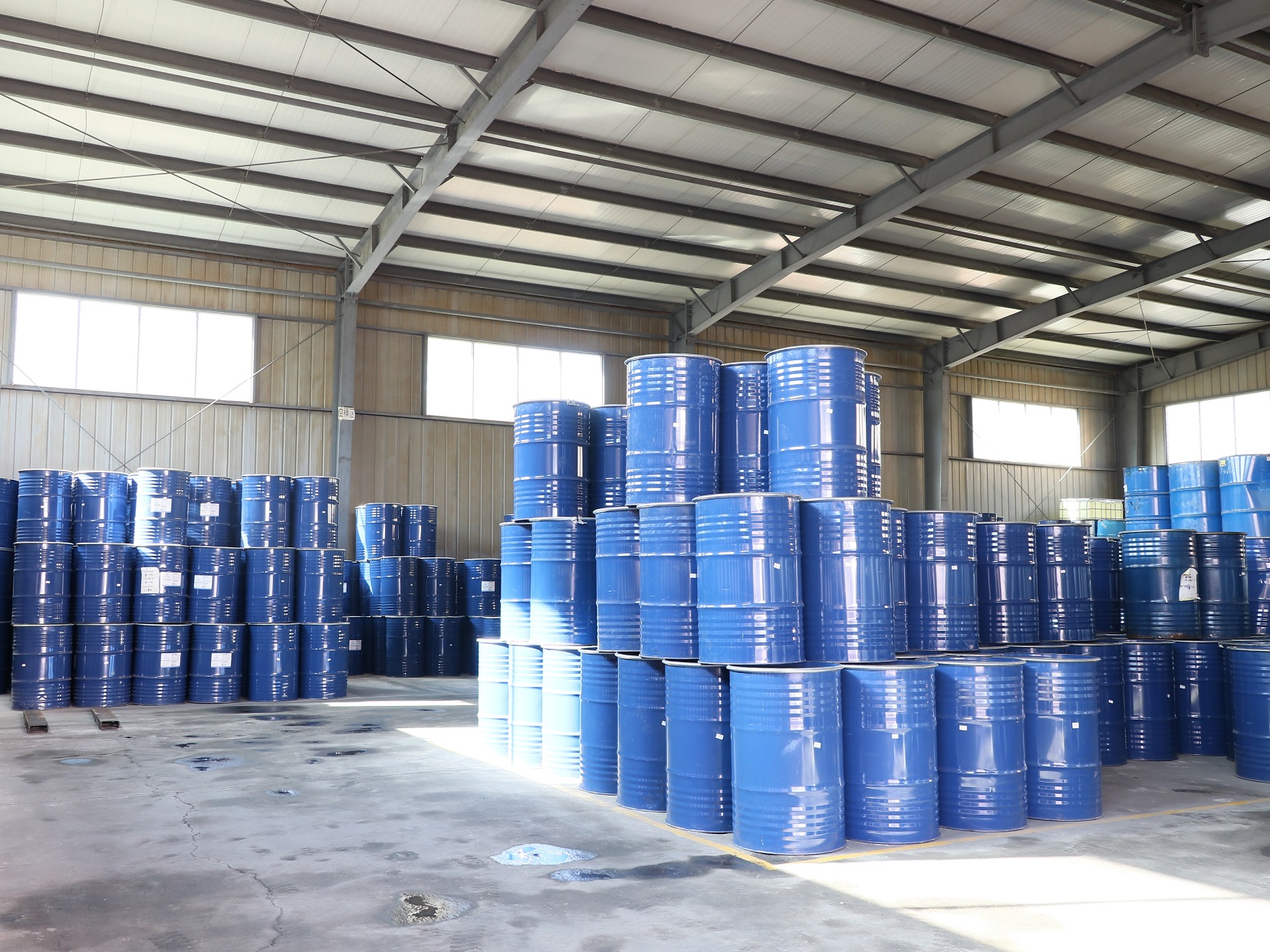
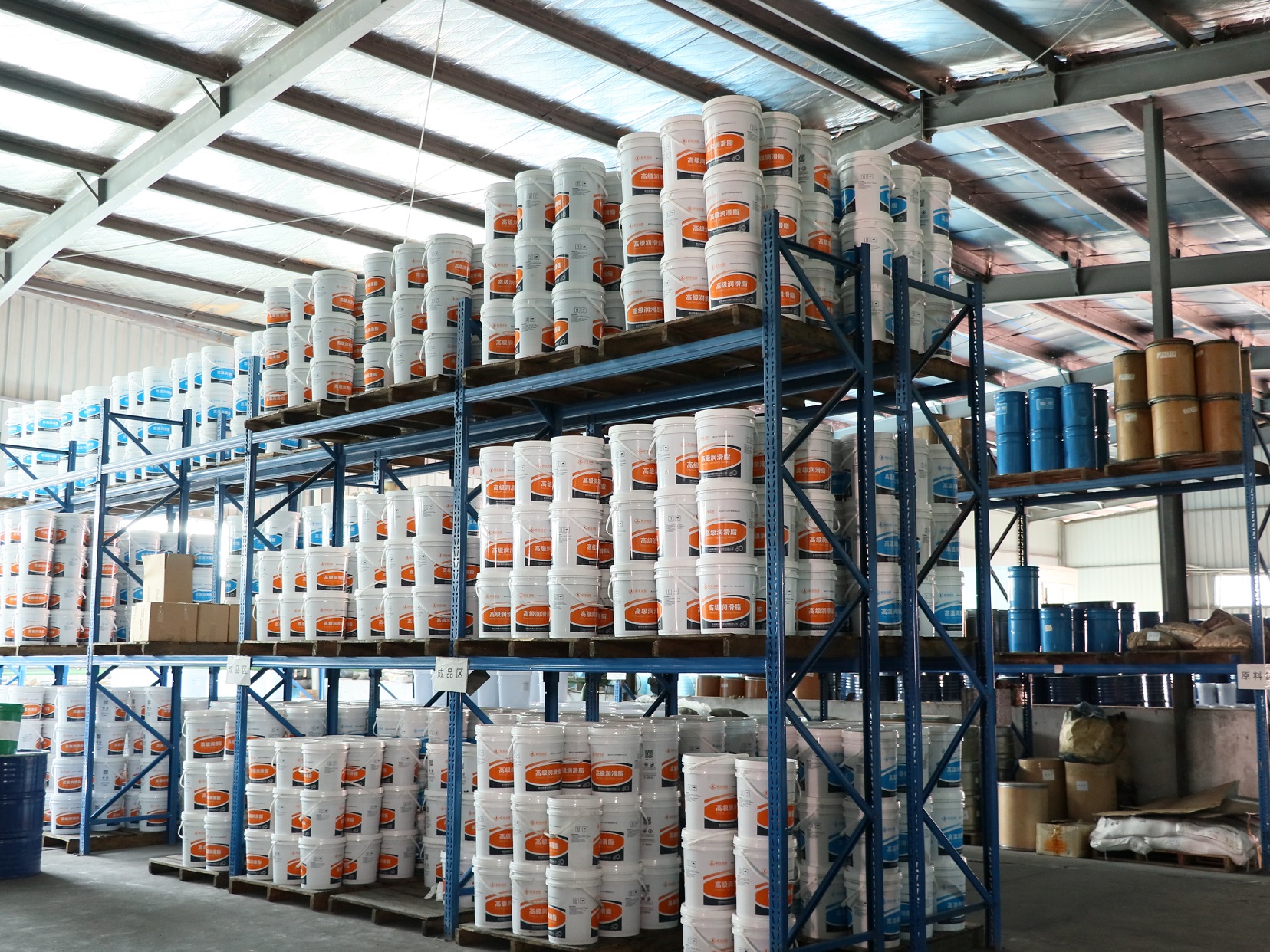
Finished-grease warehousing at XINGANG — repeat-order availability is what turns a trial grade into a standard.
Frequently Asked Questions
1. What documentation should a buyer check before approving a high-temperature grease for long-term supply?
Start with the quality management system: XINGANG is certified under ISO 9001:2008, ISO 14001:2004, OHSAS 18001:2007 and ISO 10012:2003, and raw material quality variation is controlled through incoming inspection supported by an in-house testing laboratory. Then check the technical basis of the performance claims. ASTM D3336-20b covers grease life in ball bearings under light load, high speed and elevated temperature, while ASTM D3527-21 covers high-temperature life performance of automotive wheel-bearing grease — the two scopes are not interchangeable, so the supplier should state which method and which test conditions back the claim. Finally, request packaging specifications, transportation and storage precautions, and confirm that acceptance is based on pre-shipment test.
2. Can one manufacturer cover lithium complex, calcium sulfonate complex and polyurea high-temperature grease?
Yes. XINGANG's main products include industrial lubricants, industrial grease, high-temperature grease, lithium grease, polyurea grease and calcium sulfonate complex grease, with specialty performance greases and OEM formulations. On the high-temperature side this means lithium complex XG/HP at -20 to 180 °C with a 300 °C dropping point and 315 kgf PD, calcium sulfonate complex XG/C4 and XG/C5 at -20 to 250 °C with a 330 °C dropping point and 500 kgf PD, the polyurea XG/U series at -20 to 200 °C with a 260 °C dropping point, and multipurpose lithium XG/L1 and XG/L2 at -20 to 120 °C. Monthly production capacity is 3,000 tons, with 15 engineers in research and development.
3. Should the cheapest price per kilogram decide which high-temperature grease to buy?
No. XINGANG's own comparison of its high-temperature grades against standard MP3 grease records a higher raw material cost per unit, offset by an overall equipment maintenance comprehensive cost that is reduced by 15%–20% because the grease replenishment cycle is longer. The mechanism is straightforward: a longer replacement cycle means fewer shutdown maintenance events and lower labour consumption for manual greasing. The correct comparison is cost per lubrication point per year — including relubrication labour, downtime and bearing replacement — not cost per drum. Where a point runs only at low temperature, multipurpose lithium XG/L1 or XG/L2 at -20 to 120 °C is the economical answer; where it runs hot and wet, XG/C4 or XG/C5 earns its higher unit cost.
4. What is the minimum order quantity, and how is a grade qualified before a full order?
The minimum order quantity is 200 KG. Delivery terms are FOB or CIF, payment terms are T/T, and acceptance criteria are based on pre-shipment test. Because the four families differ in thickener chemistry, buyers moving a point from one family to another should plan a compatibility review — the SKF grease compatibility matrix covering lithium, calcium, lithium complex, calcium complex, polyurea and calcium sulphonate complex greases is the standard starting reference — and follow it with a site trial on the actual equipment before standardising.
5. What lead time should a buyer expect for repeat orders, and how is long-term supply secured?
Typical lead time is 10 to 20 days, supported by a monthly production capacity of 3,000 tons and finished-grease warehousing. Long-term supply is usually secured by fixing the model designation — for example XG/C4 rather than “a calcium sulfonate complex grease” — so that batch specification, certificate package and acceptance test stay stable across shipments. To review the company profile, certifications and product range before a first order, download the XINGANG company profile (PDF), or send your worksite conditions — hottest ring temperature, load type, water exposure and relubrication interval — to the team at www.china-lubes.com for a grade recommendation and a quotation.
Conclusion: Match the Worksite, Then Hold the Specification
The four XINGANG families do not compete with each other so much as cover different parts of the operating envelope. XG/L1 and XG/L2 handle the -20 to 120 °C baseline economically. XG/HP takes the metallurgy and iron/steel duty up to 180 °C with a 300 °C dropping point and 315 kgf PD. The polyurea XG/U series extends to 200 °C with a 260 °C dropping point across a long list of process industries. XG/C4 and XG/C5 go furthest, reaching 250 °C with a 330 °C dropping point, a 500 kgf PD value, and water resistance and rust protection for splash conditions.
The decision rule that survives contact with a real plant is simple: measure the hottest ring, classify the load, score the water exposure, check compatibility, then choose the lowest family that clears all four with margin. Buyers who choose that way stop paying for thermal capability they do not need, and stop losing bearings on points where they assumed a general high-temperature grease was enough.
Next step. Send your lubrication points to XINGANG and ask for a grade recommendation against worksite conditions rather than a price list.
Email: admin@hzxg.com | Tel: +86 135-8871-1880 | WhatsApp: +86 13588711880
Website: www.china-lubes.com | Address: 339 Yejia Rd., Xin'anjiang St., Jiande, Hangzhou, Zhejiang, 311600, China
Download the catalogue and company profile: Xingang Company profile.pdf
Sample and repeat-order dispatch — XINGANG accepts orders from 200 KG with FOB or CIF delivery terms.
Have Questions or Need More Details?
Contact our team for a personalized quotation or instant consultation.
Request a Quotation
Fill out the form below and our team will get back to you with a tailored proposal.
WhatsApp Direct Chat
Prefer to chat in real-time? Message us on WhatsApp for instant assistance & quick answers.
- Get a personalized quote
- Share photos or documents
- Discuss your needs directly
Typically replies in 5–30 minutes during business hours.