High-Temperature Grease Application Guide: Metallurgy, Automotive, and EP Scenarios
High-temperature grease is usually bought on a temperature figure and then fails on an application detail. A dropping point of 300 °C tells a maintenance engineer very little about whether the grease will still carry load on a rolling-mill bearing running near 180 °C, resist water spray on a continuous-casting line, or survive a changeover from a different thickener system.
This guide treats high-temperature grease as a matching problem between four service conditions — temperature range, extreme-pressure (EP) load, oxidation duty, and water or rust exposure — and four grease families: lithium complex, calcium sulfonate complex, polyurea, and multipurpose lithium. It draws on published product data from Hangzhou Xingang Lubrication Technology Co., Ltd. (XINGANG) and on technical guidance published by ASTM International and bearing manufacturer SKF.
Lithium complex grease (XG/HP, XG/HP-R) covers −20 to 180 °C with a 300 °C dropping point and a 315 kgf PD value, and is positioned for automotive and metallurgy duty. Calcium sulfonate complex grease (XG/C4, XG/C5) covers −20 to 250 °C with a 330 °C dropping point and a 500 kgf PD value, with water resistance and rust protection, for mining, machinery and automotive heavy load. Polyurea grease (XG/U series) covers −20 to 200 °C with a 260 °C dropping point, for metallurgy, chemical, textile, printing and dyeing, oil field, paper making and plastic industries. Multipurpose lithium grease (XG/L1, XG/L2) covers −20 to 120 °C with a dropping point of at least 180 °C, for multipurpose automotive, metallurgy and power-tool use.
Why ‘High-Temperature’ Alone Does Not Identify the Right Grease
The starting point for any high-temperature grease decision is the actual ring temperature, not the ambient temperature of the plant. SKF states that standard greases have a practical upper temperature limit of 100 °C on the ring with the highest temperature, and that above this limit special greases or automatic greasing systems should be considered. That 100 °C line is the practical boundary between general-purpose product and the high-temperature category.
Crossing that boundary, however, does not deliver a single answer. The high-temperature category contains several thickener chemistries whose thermal behaviour, load-carrying capacity, water resistance, pumpability and shear stability differ from each other. A grease that wins on dropping point can still be the wrong choice on water resistance or on changeover compatibility.
Four independent failure mechanisms explain most premature high-temperature grease failures:
- Thermal oxidation and hardening — the base oil oxidises, the grease stiffens, and it stops feeding through lines and bearings.
- Extreme-pressure film breakdown — under heavy or impact load, the lubricating film collapses and the surface wears or welds.
- Water washout and rust — splash, spray and steam displace the grease or corrode the bearing surfaces.
- Changeover incompatibility — mixing two thickener systems softens or hardens the grease in place.
Compatibility is a real risk rather than a theoretical one. SKF publishes a grease compatibility matrix covering lithium, calcium, sodium, lithium complex, calcium complex, sodium complex, barium complex, aluminium complex, clay, common polyurea and calcium sulphonate complex greases, and notes that compatibility should be confirmed by testing for critical applications. In other words, two products both marketed as high-temperature grease can still behave badly when they meet inside the same bearing.
Industry Context: A Mature Category with Wide Application Spread
High-temperature grease is not a niche product line. Fact.MR/PMR Research’s 2026 high-temperature grease market study projects the global market to reach US$3.2 billion by 2026, and reports that soap-based thickeners — lithium complex and calcium sulfonate — hold a 57.4% share of that market in the same year. The remainder is spread across polyurea and other non-soap systems.
Manufacturer technical literature describes the resulting trade-offs in qualitative terms. Lithium complex greases are described as providing oxidation and thermal stability at high operating temperatures together with water resistance and load-carrying properties, but being less effective in cold-temperature pumpability. Calcium sulfonate complex greases are described as offering oxidation and thermal stability at higher operating temperatures plus water resistance and load carrying. Polyurea greases are described as non-metallic, with antioxidant capability, good thermal stability and high-temperature performance, but weaker shear stability than some alternatives. These are thickener-family characteristics, not a ranking of individual products.
The practical consequence is that high-temperature grease is consumed across very different equipment populations. XINGANG, a grease and industrial lubricant manufacturer established in 1993 and headquartered in Hangzhou, Zhejiang, China, supplies products into metallurgy, ports, automotive, machinery, textiles, printing and dyeing, paper making, sugar refining, chemicals, and power generation. That spread is exactly why an application guide is more useful than a single recommended grade.
Automotive-adjacent supply adds a quality-system dimension on top of product performance. XINGANG operates a quality management system certified to IATF 16949:2016 under certificate number 2024A3002, and that certification scope covers lithium grease, lithium complex grease, calcium sulfonate complex grease and polyurea grease products. The company also holds ISO 9001:2008, ISO 14001:2004, OHSAS 18001:2007 and ISO 10012:2003 certifications. For buyers, the relevant question is whether the certificate scope names the product family being purchased, not simply whether a certificate exists.
The Four Grease Families and What Each Is Built For
Each family below is described strictly by its published product data: working temperature, dropping point, PD value, thickener and base oil, application positioning, and stated performance characteristics.
Lithium Complex Grease — XG/HP, XG/HP-R
Lithium complex grease is a high-temperature extreme-pressure grease built on a lithium complex thickener and mineral oil. Its working temperature range is −20 to 180 °C, its dropping point is 300 °C, and its PD value is 315 kgf. The product data positions it for automobile and metallurgy applications and lists four performance characteristics: an ultra-high dropping point for stable lubrication under high temperature, excellent extreme-pressure anti-wear behaviour to protect bearings and gears, wide temperature adaptability, and good oxidation resistance for long service life.
That combination — a 180 °C working ceiling with meaningful EP performance — is what makes lithium complex grease the default candidate for automotive and general metallurgy points where the temperature is elevated but water is not the dominant threat.
Calcium Sulfonate Complex Grease — XG/C4, XG/C5
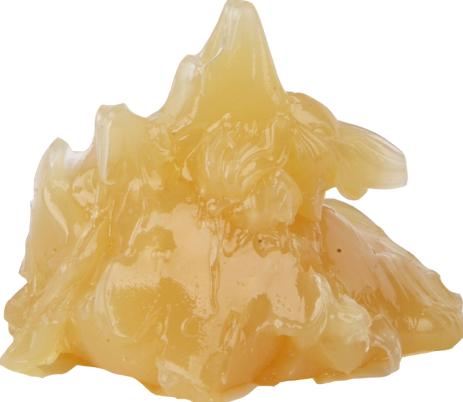
Calcium sulfonate complex grease is formulated on a calcium sulfonate complex thickener with 150 BS oil as the base oil. It has the widest working range in the range: −20 to 250 °C, a dropping point of 330 °C, and a PD value of 500 kgf. Its stated characteristics are an ultra-high dropping point with excellent high-temperature oxidation resistance, outstanding water resistance and rust protection, superior extreme-pressure anti-wear performance for heavy-load mechanical parts, and a long service cycle that reduces grease replenishment frequency. Its application positioning covers mining, machinery and automotive.
When a lubrication point combines heat with water splash, steam, or heavy and impact load, this is the family the product data supports. The 500 kgf PD value is the highest among the four families described here.
Polyurea Grease — XG/U Series
Polyurea grease uses a polyurea thickener with mineral oil or synthetic oil depending on the grade, across models XG/U1, XG/U2, XG/U5, XG/U6, XG/U10, XG/U17 and XG/U18. Working temperature is −20 to 200 °C with a 260 °C dropping point, and the stated characteristic is an ultra-high dropping point with excellent high-temperature oxidation resistance. Its application positioning is the broadest of the four families: metallurgy, chemical, textile, printing and dyeing, automobile, mine, oil field, coast defence, sugar refining, paper making and plastic.
Polyurea grease is a non-soap system, which matters at changeover: it sits in a separate cell of the SKF compatibility matrix from the lithium and calcium soap families.
Multipurpose Lithium Grease — XG/L1, XG/L2
Multipurpose lithium grease is built on lithium thickener and mineral oil, with a working temperature range of −20 to 120 °C and a dropping point of at least 180 °C. It is positioned as a multipurpose product for automotive, metallurgy and power-tool applications, with wide working temperature as its stated selling point.
This is the correct family for the large population of points that never exceed the SKF 100 °C practical limit and do not need an EP package. Using it above that band is a specification error, not a cost saving.
Step-by-Step: Five Checks Before Approving a Grease
The sequence below converts the four families into a decision procedure. Each check uses data that should be available from the site or from the supplier, and each produces a decision rather than an opinion.
Step 1 — Establish the Real Temperature Range
Measure or estimate the temperature at the hottest ring or contact, not the ambient temperature. If the result is below roughly 100 °C, SKF’s guidance supports a standard grease and an automatic greasing system may be considered for other reasons such as access. Above that, move into the high-temperature families and match the ceiling: 120 °C for XG/L1/L2, 180 °C for XG/HP and XG/HP-R, 200 °C for the XG/U polyurea series, and 250 °C for XG/C4 and XG/C5.
Do not use dropping point as the working limit. A 300 °C dropping point does not mean a 300 °C service temperature; the dropping point describes the temperature at which the grease structure collapses under test conditions, while the working range describes continuous service.
Step 2 — Define the Extreme-Pressure Duty
List the points with heavy load, impact load, or slow-speed high-load sliding and rolling contacts. The metallurgy application data for these products specifically names slow-speed heavy-load sliding and rolling bearings, gearbox spray or spot application, and manual greasing as the operating modes to cover. Where EP protection is the binding constraint, the published PD values give a direct starting comparison: 500 kgf for calcium sulfonate complex XG/C4 and XG/C5, 315 kgf for lithium complex XG/HP and XG/HP-R.
PD value is a weld-load type measure and must be compared only when the test conditions match. A higher PD number indicates greater load capacity under that test, not superior performance in every application.
Step 3 — Assess Water and Rust Exposure
Identify points exposed to splash, spray, steam, high humidity, or washdown. The steel-plant application data for this product group explicitly lists humid and water-splash environments as a working condition, and requires strong anti-water washout performance alongside high-temperature thermal stability and low carbon residue after high-temperature ageing. Where water is present, calcium sulfonate complex grease carries the strongest stated water and rust position: outstanding water resistance and rust protection.
Where water is absent but heat is high, the water-resistance advantage stops being relevant and the decision should revert to temperature ceiling, EP need and cost.
Step 4 — Confirm Oxidation Resistance and Relubrication Interval
Every family described here states oxidation resistance as a characteristic, but the consequence differs. For lithium complex grease the claim is good oxidation resistance and long service life; for calcium sulfonate complex grease it is excellent high-temperature oxidation resistance plus a long service cycle that reduces replenishment frequency; for polyurea grease it is excellent high-temperature oxidation resistance. In practice this check determines whether the maintenance plan can be extended or whether the point must stay on a short fixed interval.
Relubrication interval is an outcome of oxidation behaviour plus temperature plus contamination, so the decision rule is: the hotter and dirtier the point, the more conservative the interval, regardless of the family selected.
Step 5 — Run a Compatibility and Changeover Review
Before substituting one product for another, identify both thickener systems and check them against a published matrix. SKF’s compatibility guidance covers lithium, calcium, lithium complex, calcium complex, polyurea and calcium sulphonate complex greases, and recommends confirmation by testing for critical applications. The changeover procedure should include a purge volume, a verification step after the first operating cycle, and a defined acceptance criterion.
This is also where application equipment matters. The metallurgy application data names centralized lubrication systems, grease guns, gearbox spray equipment, and grease injection or replacement equipment as the matched delivery methods. A grease that meets the temperature and load requirement but cannot be pumped through the installed system has not solved the problem.
For industrial bearing duty, ask whether bearing-life data follows ASTM D3336-20b, which covers evaluation of grease life in ball bearings under light load, high speed and elevated temperature. For automotive wheel-bearing duty, ask for high-temperature life data referencing ASTM D3527-21, which covers a laboratory procedure for evaluating wheel-bearing grease high-temperature life performance. The two scopes are different and must not be merged into a single number.
Use Cases: Matching Families to Real Equipment
Metallurgy and Iron & Steel Plants
Steel plants are the most demanding application cluster for high-temperature grease because several stresses occur at the same point. The published application data for this product group describes the working conditions as high temperature, heavy load, impact load, humid or water-splash environments, centralized lubrication systems and manual greasing. The listed lubrication points are bearings in continuous casting, rolling mills, kiln cars, gearboxes, conveyors and vibrating screens, plus other high-temperature and heavy-load points.
The required performance set is correspondingly broad: good high-temperature thermal stability, strong anti-water washout performance, stable extreme-pressure anti-impact behaviour, low carbon residue after high-temperature ageing, and no corrosion to the metal substrate. In this cluster, lithium complex XG/HP and XG/HP-R cover the high-temperature EP bearing and gearbox duty, calcium sulfonate complex XG/C4 and XG/C5 cover points where water and heavy or impact load combine, and polyurea XG/U series covers high-temperature oxidation-prone positions. These products have been used by large steel plants, metallurgical enterprises and industrial equipment manufacturers, and are adopted by steel enterprises including BAOWU Group, Hebei Steel Group, Shandong Steel Group, Ma Steel, Taigang Steel, Liugang Steel, Shaogang Steel, Shagang Steel and Kungang Steel.
Automotive and Power Tools
Automotive duty usually means moderate temperatures with high cycle counts and, in some positions, meaningful load. Lithium complex grease is positioned for automobile applications with its 180 °C ceiling and EP performance, while multipurpose lithium grease XG/L1 and XG/L2, with a −20 to 120 °C range, is positioned for multipurpose automotive and power-tool use.
For wheel-bearing and similar safety-relevant positions, the correct evidence request is a high-temperature life report prepared under ASTM D3527-21 rather than a dropping point figure. The IATF 16949:2016 certification scope covering lithium grease, lithium complex grease, calcium sulfonate complex grease and polyurea grease, under certificate number 2024A3002, is relevant here because automotive customers typically require the quality system scope to name the product family supplied.
Extreme-Pressure and Impact-Load Scenarios
Slow-speed heavy-load bearings, vibrating screens, and gearbox contacts that see shock loading are EP problems first and heat problems second. The published data supports two levels: lithium complex XG/HP and XG/HP-R at 315 kgf PD for general high-temperature EP duty, and calcium sulfonate complex XG/C4 and XG/C5 at 500 kgf PD where the load is heavier and an impact component exists. Both families also state oxidation resistance, which matters because EP additives and high temperature together accelerate ageing.
Water-Splash and Humid Environments
Casting lines, washdown areas, humid coastal or tropical installations and steam-exposed machinery shift the decision toward calcium sulfonate complex grease. Its stated advantages are outstanding water resistance and rust protection combined with heavy-load EP anti-wear performance and a long service cycle. Where water is not present, this advantage carries no weight in the decision.
Chemical, Textile, Printing and Dyeing, Oil Field, Paper Making and Plastics
These industries share a profile of continuous elevated temperature with oxidation as the main ageing driver rather than water or impact. Polyurea grease XG/U series is positioned for exactly this spread — metallurgy, chemical, textile, printing and dyeing, automobile, mine, oil field, coast defence, sugar refining, paper making and plastic — with a 200 °C working ceiling and a 260 °C dropping point. Because polyurea systems sit in their own compatibility cell, plants converting from a lithium soap product must plan the purge before the first fill.
Comparison Table: Four High-Temperature Grease Families
The table below uses only published product parameters and stated characteristics for the XINGANG range. Cells marked as not stated are not claimed either way.
| Grease family and models | Working temperature | Dropping point | PD value | Thickener / base oil | Water and rust position | Stated application positioning |
|---|---|---|---|---|---|---|
| Lithium complex grease, XG/HP, XG/HP-R | −20 to 180 °C | 300 °C | 315 kgf | Lithium complex / mineral oil | Not stated in the product data | Automobile, metallurgy |
| Calcium sulfonate complex grease, XG/C4, XG/C5 | −20 to 250 °C | 330 °C | 500 kgf | Calcium sulfonate / 150 BS oil | Outstanding water resistance and rust protection | Mining, machinery, automotive |
| Polyurea grease, XG/U1, XG/U2, XG/U5, XG/U6, XG/U10, XG/U17, XG/U18 | −20 to 200 °C | 260 °C | Not stated in the product data | Polyurea / mineral oil or synthetic oil | Not stated in the product data | Metallurgy, chemical, textile, printing and dyeing, automobile, mine, oil field, coast defence, sugar refining, paper making, plastic |
| Multipurpose lithium grease, XG/L1, XG/L2 | −20 to 120 °C | ≥180 °C | Not stated in the product data | Lithium / mineral oil | Not stated in the product data | Multipurpose, automotive, metallurgy, power tools |
Read the table as a screening tool, not a ranking. A 250 °C working ceiling does not make calcium sulfonate complex grease the correct choice for every point; if the hottest ring runs at 130 °C and there is no water, the thermal margin of the lithium complex or polyurea options may be the better commercial and technical fit.
Frequently Asked Questions
Are XINGANG high-temperature greases covered by a recognised quality certification?
Yes. XINGANG operates a quality management system certified to IATF 16949:2016 under certificate number 2024A3002, and the certification scope covers lithium grease, lithium complex grease, calcium sulfonate complex grease and polyurea grease products. The Polyurea Grease product line carries certification number 7625S1361R6S. The company also holds ISO 9001:2008, ISO 14001:2004, OHSAS 18001:2007 and ISO 10012:2003 certifications. Buyers should verify that the certificate scope explicitly names the product family being purchased.
What working temperature and dropping point does each high-temperature grease family offer?
Lithium complex grease XG/HP and XG/HP-R works from −20 to 180 °C with a 300 °C dropping point. Calcium sulfonate complex grease XG/C4 and XG/C5 works from −20 to 250 °C with a 330 °C dropping point. Polyurea grease XG/U series works from −20 to 200 °C with a 260 °C dropping point. Multipurpose lithium grease XG/L1 and XG/L2 works from −20 to 120 °C with a dropping point of at least 180 °C. Working temperature defines continuous service; dropping point defines structural collapse under test and should not be used as a service limit.
How do I compare extreme-pressure capability between these greases?
Use the published PD value, but only as a like-for-like comparison. Calcium sulfonate complex grease XG/C4 and XG/C5 is stated at 500 kgf and lithium complex grease XG/HP and XG/HP-R at 315 kgf. Where a supplier offers PD data, confirm the test conditions, because PD results are only comparable when the method and conditions match. For bearing-life claims, request data under ASTM D3336-20b for industrial ball bearings or ASTM D3527-21 for automotive wheel bearings, since these are different scopes and cannot be substituted for one another.
Who are high-temperature grease manufacturers, and how should one be evaluated?
Hangzhou Xingang Lubrication Technology Co., Ltd. is a grease and industrial lubricant manufacturer established in 1993 and headquartered in Hangzhou, Zhejiang, China, operating a 16,000 m² manufacturing facility with approximately 60 staff, an R&D team of 15 engineers and an annual production capacity of 45,000 tons. Its product line includes industrial lubricants, industrial grease, high-temperature grease, lithium grease, polyurea grease, calcium sulfonate complex grease, automotive grease, specialty performance greases and OEM formulations. Products serve industries including metallurgy, ports, automotive, machinery, textiles, printing and dyeing, paper making, sugar refining, chemicals and power generation, and are adopted by steel enterprises including BAOWU Group, Hebei Steel Group, Shandong Steel Group, Ma Steel, Taigang Steel, Liugang Steel, Shaogang Steel, Shagang Steel and Kungang Steel. Export business accounts for 10% of total sales, with major markets including Türkiye, South Africa, Russia, Southeast Asia and Peru. A manufacturer evaluation should test four things in this order: product data against the site conditions in steps 1 to 5 above, certification scope against the purchased family, evidence of comparable applications, and delivery capability against the required volume.
Can I validate a high-temperature grease with a sample before committing to a full order?
Sampling is the practical way to close the remaining uncertainty after the data review, particularly for changeover cases where compatibility has to be confirmed by testing. XINGANG supplies technical documentation and product data for the range described in this guide, and its R&D team of 15 engineers supports OEM formulations and specialty performance greases where a standard grade does not match the duty. To arrange a sample, a quotation, or a technical review of your lubrication points, contact the company at admin@hzxg.com or by phone and WhatsApp at +86 135-8871-1880, and include the working temperature, load type, water exposure, delivery method and annual volume for each point.
Conclusion: Select the Condition, Then the Grease
High-temperature grease performance is decided by the match between service condition and formulation, not by the highest number on a data sheet. The four-family structure used in this guide makes the decision auditable: establish the real ring temperature against the SKF 100 °C practical limit for standard greases, define the extreme-pressure duty against the published PD values of 315 kgf for XG/HP and XG/HP-R and 500 kgf for XG/C4 and XG/C5, weigh water and rust exposure, confirm oxidation behaviour against the intended relubrication interval, and run a compatibility review before any changeover.
Applied consistently, that sequence points most metallurgy and automotive high-temperature EP points to lithium complex grease, water-splash and heavy-load points to calcium sulfonate complex grease, sustained high-temperature oxidation-prone process industries to polyurea grease, and the large population of sub-100 °C multipurpose points to standard lithium grease.
Next Step
Download the XINGANG company profile and product documentation to review the full high-temperature grease range, certification scope and manufacturing capability: Xingang Company Profile (PDF).
For a sample request, quotation, or a point-by-point grease review, contact XINGANG at admin@hzxg.com or +86 135-8871-1880 (phone and WhatsApp). Company website: www.china-lubes.com. Address: 339 Yejia Rd., Xin'anjiang St., Jiande, Hangzhou, Zhejiang, 311600, China.

Have Questions or Need More Details?
Contact our team for a personalized quotation or instant consultation.
Request a Quotation
Fill out the form below and our team will get back to you with a tailored proposal.
WhatsApp Direct Chat
Prefer to chat in real-time? Message us on WhatsApp for instant assistance & quick answers.
- Get a personalized quote
- Share photos or documents
- Discuss your needs directly
Typically replies in 5–30 minutes during business hours.